Tversky & Kahneman did a study that proved the wrong
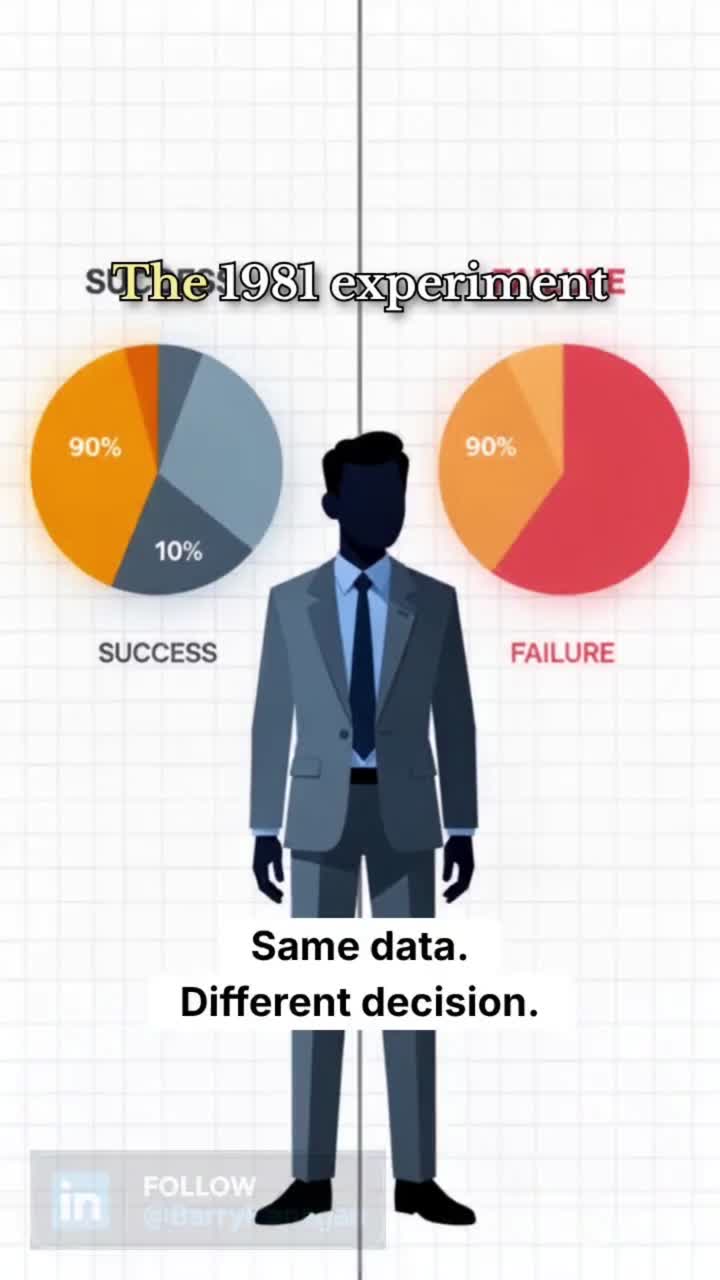
Tversky & Kahneman did a study that proved the wrong frame can kill the right idea. Your buyer is not only judging the facts. They are judging whether those facts are easy to defend.
307 people got the same decision. Only the wording changed.
Their answers flipped.
A 90% success rate feels safe. A 10% failure rate feels risky.
Same math. Different meeting.
This is why strong proposals die in boardrooms, sales calls, pricing talks, and renewals. The case makes sense. The room still pulls back.
Because the frame made the decision feel hard to defend.
5 places framing changes B2B decisions:
-
You present the upside because your team already believes. ↳ Show the risk before the buyer has to find it for you.
-
You push a deadline around your sales target. ↳ Tie the date to their business goal. “To hit your Q3 launch, we need paperwork by the 15th.”
-
You present savings as a yearly number. ↳ Translate it into monthly waste. “That is $8,000 leaving the business every month.”
-
You call it a discount. ↳ Check what it signals. Helpful can sound desperate.
-
You present the plan in your team’s language. ↳ Rewrite it in words the buyer feels they can defend.
The painful part is that you can lose the room without being wrong.
Your math can check out. Your case can make sense. Your timing can be right.
But if the frame makes the buyer feel exposed, rushed, or hard to defend, they will stall. Before your next important meeting, write the same recommendation in two frames:
One as gain. One as loss.
If the decision changes, the frame is doing more work than the facts.
Bad math is rarely what kills the room. The right idea still dies when it arrives in the wrong frame.
♻️ Repost for a friend who’s still blaming the room when the frame was the problem. 🔔 Follow @BarryFlanagan to make better B2B decisions before the wording makes them for you.